Retail is moving fast on AI. What about orchestration?
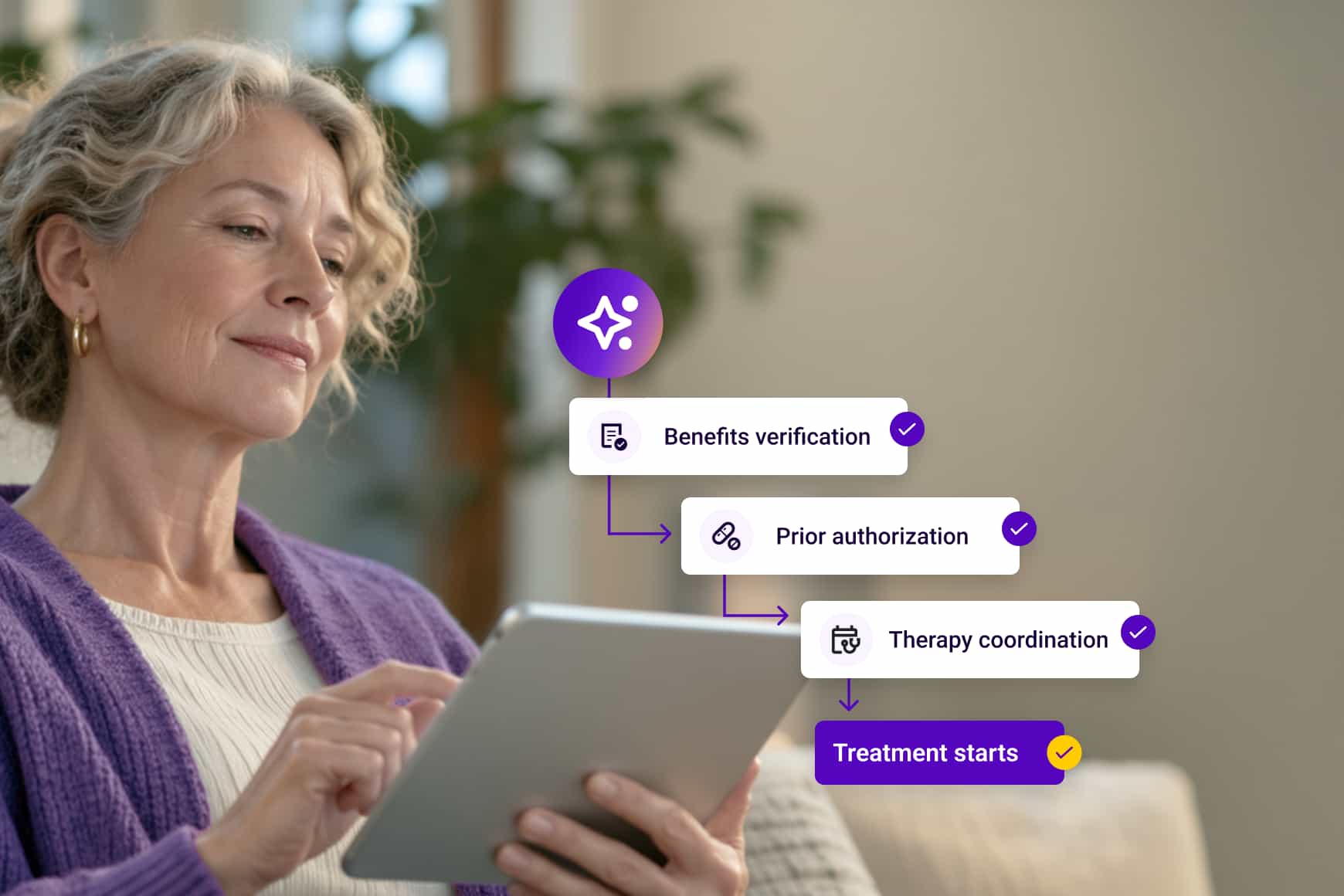
Retailers are embracing AI to deliver faster, more personalized customer experiences, but its full potential lies in how well it’s orchestrated across the business. By coordinating AI agents, associates, and systems, retailers can move beyond automating individual interactions to resolving customer requests from start to finish.
07:59 min read
Listen to article
07:57

By Michael Klein
Head of retail, travel & hospitality
Retailers have spent decades making shopping faster, more convenient, and more personalized. Ecommerce expanded channels, mobile commerce put the store in our hands and digital technologies changed how customers find and purchase products. AI agents offer new opportunities to improve experiences, but their value depends on more than what each agent can do independently. The real challenge is orchestrating the workflows, people, and systems needed to resolve customer requests across the entire journey.
The 2026 Talkdesk CXA Benchmark Survey, says that 87% of retailers are piloting or deploying autonomous AI agents. Retail also has the highest concentration of CXA Leaders of any industry surveyed.
Adoption tells only part of the story. The same research found that just 19% of retailers systematically coordinate human agents and AI agents, while disconnected systems continue to limit automation. The challenge is to give AI agents the information, access, and authority they need to complete work across the customer journey.
AI deployment is a poor measure of progress.
Retail has good reasons to embrace automation. Seasonal demand creates unpredictable service volumes, customers expect immediate answers, and pressure on operating margins leaves little room for inefficiency. However, the industry risks confusing AI adoption with progress in orchestrating customer experiences
Deploying an AI agent to answer delivery questions is relatively easy. Giving that agent the information, authority, and system access required to resolve a delivery problem is considerably more complex.
Consider a customer whose order hasn’t arrived. A conventional automated interaction might retrieve tracking information, explain the delay, and provide instructions for requesting a replacement. The customer receives an answer but may still need to contact another department to resolve the issue. An autonomous AI agent could investigate the delay, check available inventory, arrange a replacement, and update the order.
The difference is between answering a question and resolving the customer’s problem. The benchmark suggests that retailers are already seeing the value of better resolution. Sixty-five percent of retailers report major or moderate improvements in first contact resolution from AI, and 52% report comparable improvements in cost per contact.
Retailers should still measure traditional operational metrics, but they should also assess whether automation resolves the customer’s problem. An interaction that ends without escalation isn’t successful if the problem isn’t resolved.
The complexity of orchestrating retail CX automation.
A single customer request can involve ecommerce, store operations, inventory, fulfillment, payments, and customer service. Each team may rely on different applications and performance objectives. However, customers don’t recognize internal boundaries and expect the retailer to resolve their request, regardless of which department or system handles it.
For example, an online purchase returned to a physical store. Completing the exchange may require verifying the original transaction, checking inventory across locations, applying promotional pricing, processing a refund, and arranging a replacement.
Traditional automation can support individual steps. Coordinating the entire exchange may still require employees to move between systems and reconcile information manually.
Our research shows how widespread these challenges are. Fifty-one percent of retailers cite poor-quality, inaccessible, or siloed data as an automation barrier, while 47% identify disconnected systems as a primary obstacle. These problems show why improving individual areas of the business isn’t enough when the systems supporting them remain disconnected.
Retailers need more than automation within individual systems. They need orchestration across the workflows that support customer experiences, coordinating data, business processes, AI agents, and employees to resolve requests from start to finish. That requires reliable, accessible customer and operational data across systems, so AI agents and employees can work with the information they need throughout the process. Without that coordination, individual tasks may be automated while the overall customer experience remains fragmented.
Orchestration starts with understanding the customer’s request and the steps required to resolve it. Which systems need to exchange information? Where are decisions made, and when is human intervention necessary? Answering these questions helps retailers identify where orchestration can improve the customer experience, rather than simply accelerating individual tasks.
The human-AI hybrid workforce requires a different operating model.
Greater AI autonomy also changes how retailers manage their workforce. Associates have traditionally made decisions while technology has supported their work. Agentic AI is changing that division of responsibilities.
AI agents can interpret customer requests, execute transactions, and coordinate activities that previously required human intervention. That creates opportunities for human agents to concentrate on complex interactions where judgment, empathy, and relationship management are essential.
According to the benchmark, 56% of retailers already use AI to direct human agents toward higher-complexity cases, but deciding which tasks belong to AI and which require human agents is only the beginning. A customer disputing a refund may leverage an AI agent to retrieve transaction details, verify the return, and identify a policy exception.
In addition to established rules and policies, resolving the dispute requires considering the customer’s purchase history, loyalty status, and individual circumstances. An AI agent can take all of this into account, but if the situation calls for an exception or a sensitive decision beyond its authority, a human agent can step in, using that same context, along with empathy and judgment, to find the best resolution.
The real test for retail.
Customers don’t think about inventory systems, fulfillment processes, or which department handles their request. They care about getting the product they want, receiving it when promised, and having problems resolved without unnecessary effort.
Retailers have made significant progress in adopting AI, but adoption alone won’t deliver the experiences customers expect. Individual AI agents can improve specific interactions, but their value grows when they’re orchestrated across the workflows that support the customer journey. The opportunity for retailers is to move beyond automating individual tasks and bring AI agents, associates, and systems together to resolve customer needs from start to finish.
About Michael Klein
Michael Klein is the Head of Retail, Travel & Hospitality Product Marketing for Talkdesk, a leader in Contact Center Software. Michael is a trusted executive advisor to enterprise brands and was named a 2025 Top Retail Expert by Rethink Retail for the second consecutive year. As a global business leader with deep expertise in the technology and consumer industries, he is known for authenticity and getting to the heart of the matter. He has a wealth of experience in marketing, merchandising, technology, customer experience, Ecommerce, and digital transformation. Prior to Talkdesk, Michael was the Global Director of Industry Strategy & Marketing for the Adobe Digital Experience Cloud, where he led the GTM strategy targeting retail, travel, and consumer goods clients. Michael’s retail expertise is vast. He was a senior merchant and marketer for specialty brands including William-Sonoma, Harry & David, Discovery Channel Stores, eLuxury.com (LVMH Group), Dean & DeLuca, and wine.com where he consistently delivered positive comp store sales and margin growth for these specialty retailers. As a thought leader in global commerce Michael regularly contributes to industry events. He is an active member of the NRF Digital Council and the Retail Cloud Alliance Advisory Council. Michael also sits on the board of Visional, a video commerce platform and AndesML, a retail media platform.