How to drive an exceptional and connected retail customer experience

By Génesis Longo
00:00 min read
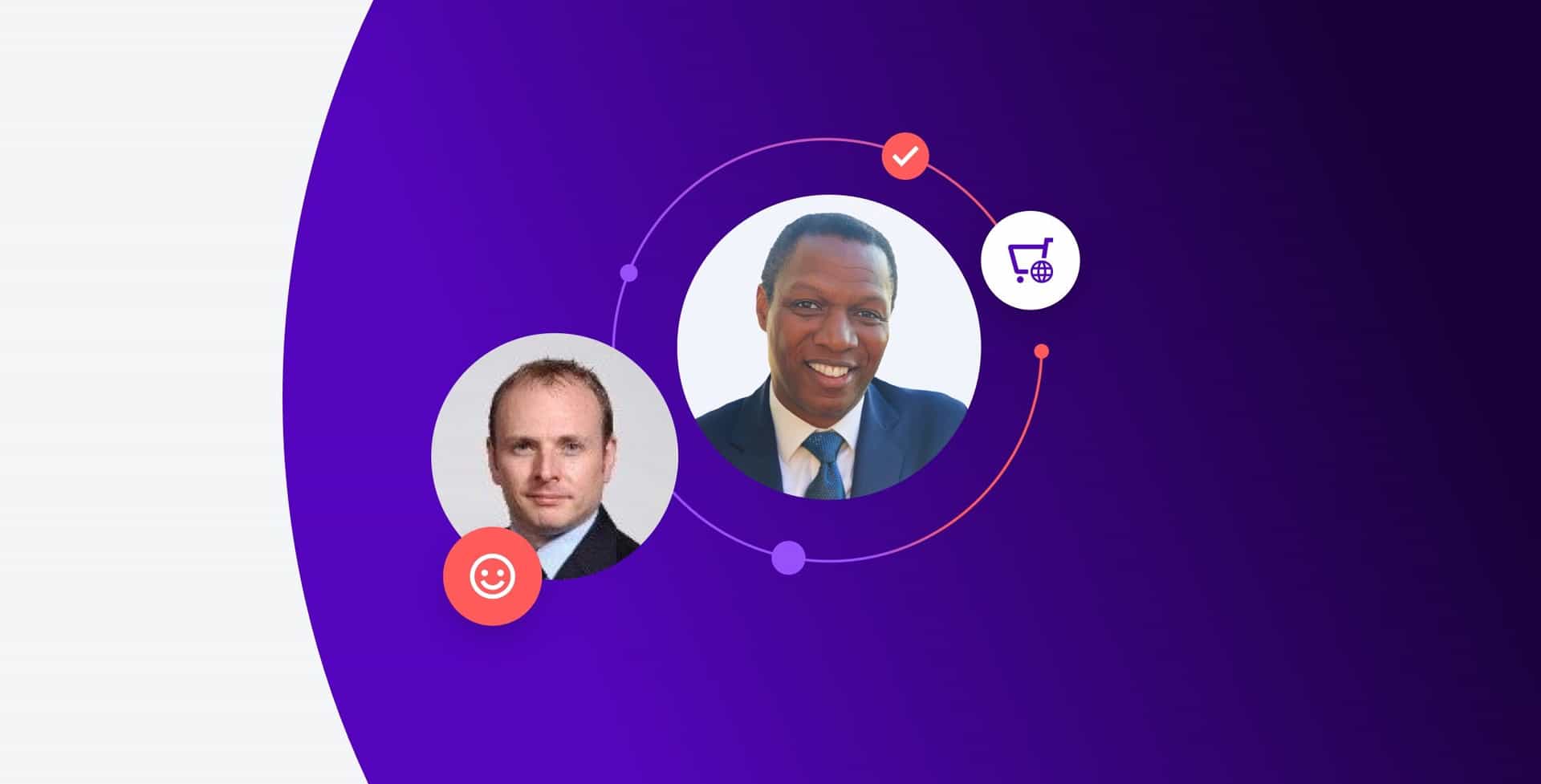
What makes a memorable retail customer experience? Talkdesk invited Don Haddaway, from Artisiam, to speak about it.
In the retail space, having connected contact with customers is crucial. But what’s more important is the context of that contact and its underpinning the creation of positive and memorable customer experiences.
That’s something Don Haddaway, from Artisiam Ltd, feels passionate about. For the last 20 years, he’s been focused squarely on how to shape customer experience and contact across multiple industries and how this changes over time.
Chris Wyper, the director of strategy, retail & consumer goods at Talkdesk, is a retail industry veteran with a keen eye for the uses of technology. “I’m always focused on how technology can be used to really help transform and drive the outcomes that retailers really want,” says Chris.
Don spoke with Chris during Building the foundations for connected retail experiences, a fireside chat where he shared key insights into building the foundations for connected and contextual retail experiences. They discuss how to use AI, the role of employees in delivering a memorable customer experience, and why digitization across channels is critical for retailers.
Build the right foundations to drive loyalty and retention.
For Don, the future of retail customer experience is rooted in the past. He views history as a teacher for understanding how humans engage with each other. “Because whilst historically we’re human—we do what we do—it’s important to understand how we behave as humans, to understand how we can then enhance things going forward,” he observes.
One of the driving trends of retail? Creating a customized experience.
“Personalization has faded away over the years, but is making a massive comeback,” Don explains. With mass manufacturing came increasing consumer desires based on a one-size-fits-all approach.
“But with the advent of digitalization and the possibility of true mass personalization—which can be done cost-effectively—people are moving much more towards having things the way they want things, much more towards companies dealing with them the way they wish to be dealt with, their preferences, their foibles, or how or where they want things delivered.”

“Digitalization and customer experience have to go hand-in-hand. So the data that's used, the quality of data is used, and the context of how and when it's used is massively important.”
Don Haddaway, founder and director of Artisiam Ltd.
This isn’t new, adds Don. “We’re multimodal creatures. We prefer to be dealt with the way they want to. But those things do come back to the point that as retail organizations, how we collect data and how we deal with people is massively, massively important.”
It’s not just about being connected.
As a consultant engaged with a range of customers of varying sizes within the retail industry, Don fundamentally sees a connected and contextual retail experience. “The key for me is [the word] contextual,” he says. “Connected is one thing—we’ve all seen the move towards digital, towards digitalization for different channels, lots of different channels about how things are done, different channels about how you can contact people. But the key thing that’s really important is the context of that contact.”
Retail is an ever-evolving beast. But what’s evolving most in the industry is the pace of change, which is accelerating quickly.

"Consumers are increasingly using digital channels, whether it's video or chat or social and virtual, to engage with retailers."
Chris Wyper, director of strategy, retail & consumer goods at Talkdesk.
“Customers increasingly want to engage digitally with retailers,” Chris says. “We see that increasing customer-consumer digital desire plays out in the contact center. Consumers are increasingly using digital channels, whether it’s video or chat or social and virtual, to engage with retailers. And in research that we did last year, what we found is that 42% of consumers use video as a means to engage with the contact center.”
Digital transformation is clearly a top priority for CX professionals, but it must align with customer expectations. With the rise of ecommerce and digital engagement, “the contact center takes on a far more strategic role,” says Chris. “Delivery against this evolving set of customer expectations requires that classic 360 degree view that everybody talks about.”
The contact center “really is the engine room,” he says. “It’s at the heart of any effective CX strategy.”
Drive exceptional retail customer experience: focus on your employees.
Creating a truly exceptional retail customer experience goes a lot deeper than you might think. “Focusing on the right kind of KPIs that truly drive that customer lifetime value,” says Chris, “is really pivoting towards a retention mindset—focusing on loyalty and building longer-term relationships.”
Loyalty is, fundamentally, driven by an organizational interpretation of factors centered on the customer experience. “The strength of that human interaction or the experience that that particular customer is having is driven by several different things,” says Don. Getting these foundations right is what will drive loyalty.
Data, data, data.
Data is one aspect of this. Behavioral psychology also plays a major role. But the key is the interpretation—the contextualization—of the data and behavior, and how this is driven by the customer’s experience. And this is where employees come into play.
Analysis and interpretation of contact avoidance, intent, and stress patterns are central facets here. “Are customers being stressed at particular points during an interaction?” asks Don. “Are particular processes that you’re putting people through stressful or generating negative sentiment, or are they generating positive sentiment?”
There’s another frequently overlooked yet crucial point: even for retail processes done in a certain way—which have always been done in that way—the data could contradict expectations (and sometimes, that’s quite welcome).
Perhaps customers are behaving in a certain way that wasn’t predicted. “That’s because what people actually want to do may be quite different from what processes we’re forcing them through,” says Don. Viewed in this way, smart use of data in the retail space could provide new insight as well as the high potential for a much better retail customer experience.
Saying the ‘AI’ word.
Of course, we also can’t ignore the development of artificial intelligence (AI) forever. “Retailers have always focused on employees and particularly customer-facing employees,” says Chris. The difference now is that AI is helping employees do their jobs better. A positive employee experience helps to tackle the wider market challenges of recruiting and retaining them, which in turn drives customer retention.
“Happy employees, happy customers,” Don says. So how do we get there? Anything from system or platform issues to difficult conversations can affect front-facing sales staff—“the window on the world to your customers,” Don says. Customers remember positive interactions—helpful staff who aren’t overly stretched and who have time for them.
Understanding individual character trends is a step in the right direction. The use of AI within retail—and, indeed, within any industry—is built on data as a foundation. More customer data means more potential uses for AI.
“There are some people who are really good at dealing with stressful customers or diffusing situations,” Don adds. “There are natural ambassadors that you have. It’s identifying who those people are within your organization—and this is where AI can be used.” A deeper and more detailed sentiment analysis helps ensure employees get the training and timeouts required to deliver exceptional customer service.
“Because without those people,” Don says, “it doesn’t matter how good your digital footprint is. It doesn’t matter how many clever widgets and how many channels you’ve got. Because if the service isn’t met with what feels like the right person—this is the important thing: it’s got to feel right—it won’t work.”
At the heart of the employee experience are the right tools, connected in the right way. Whatever technology you’re using, “there’s no substitute for agent experience,” Don says.
"What people are not expecting is to have a massive disconnect between walking into a store or going online. They expect it to be connected in some way, shape, or form."
Unify digital and physical channels.
Connecting customer and employee experiences is one thing. Extending this connection across physical and digital channels in a unified way is another necessary step. Meeting the needs of increasingly digitized customers demands focus on unifying channels.
In order to survive, retailers need to adapt: “what people are not expecting is to have a massive disconnect between walking into a store or going online,” Don says. “They expect it to be connected in some way, shape, or form.”
Increased spending comes from comfortable customers, and dynamically changing offers based on festive occasions provides the contextualization. “If you look at how companies are really trying to gain more,” explains Don, “not just loyalty but more spend from individual customers, this unification works well.”
Interpreting the data and unifying channels provides the ultimate retail experience. “The real world absolutely has to be tied to the digital world,” Don says. It doesn’t matter how good your digital channels are without it, because customers can be unforgiving of process inefficiencies and breakdowns.
Some retailers—particularly high-end brands—have already begun to reinstate the personalization that characterized historical commerce, but in a mass way. “We can go online, design your trainer… Go into a store, pick that up, somebody knows who you are, [has] your details [and] shoe size—everything’s right there,” Don says. “So the digital and physical world are connected. But more importantly, it’s tailored to your needs.”
How retailers can create a better experience.
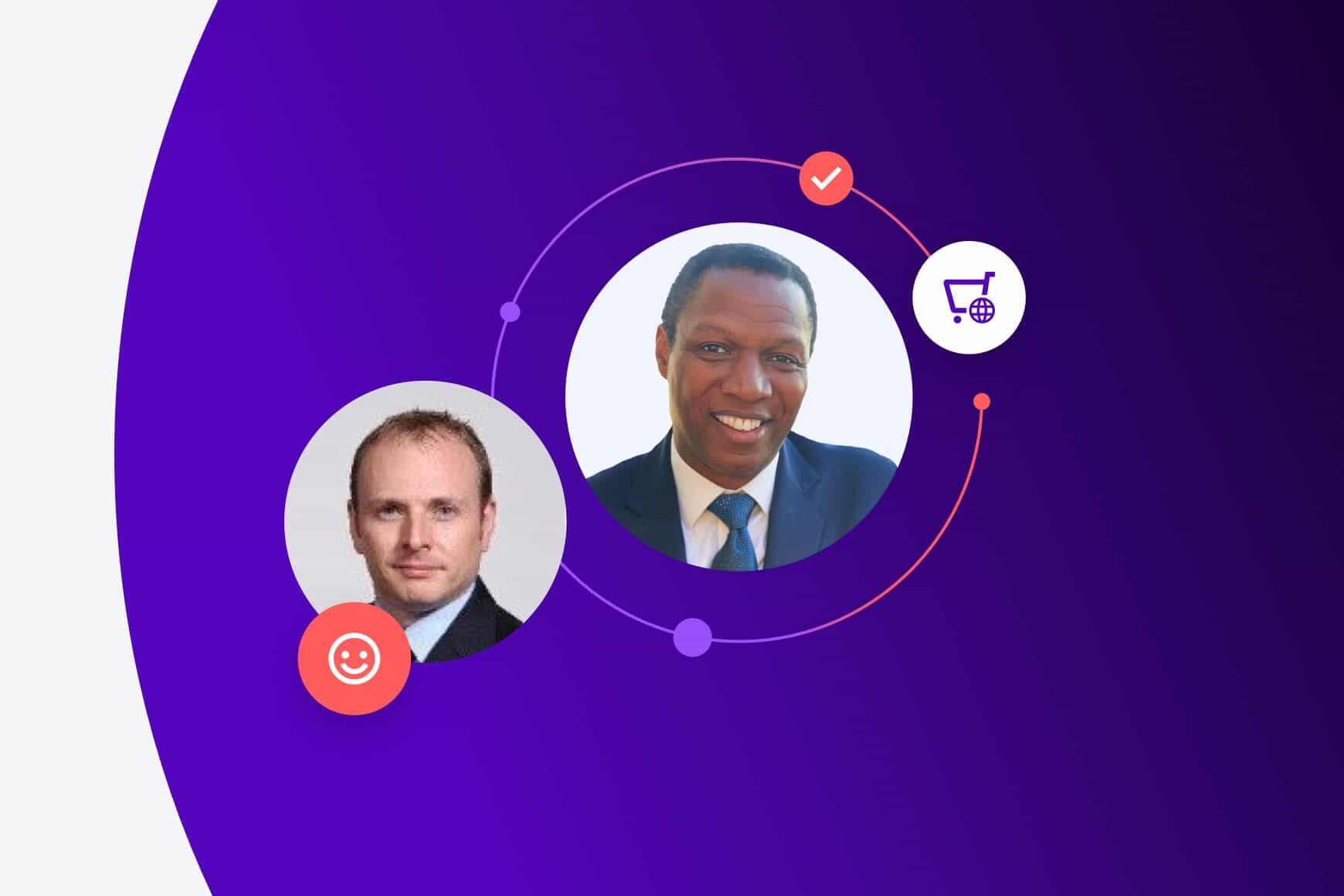
For retailers that wish to unlock the promise and potential of great customer experience, there are three takeaways from Don and Chris’ discussion:
- Let the data inform you.
“It’s really important because not everybody gets it wrong, but most people get it wrong,” Don says. There’s a huge amount of data collection, but it’s being boxed up. “Let AI shape the data for you because it will put it into completely different contexts and patterns”. - Increase AI & automation.
AI takes unstructured data and might even create entirely new boxes for truly pioneering insights ranging from contact avoidance to interpretational services, and more. - Give employees the right tools.
“You want to use these tools pointing towards customers, but you also want to use these tools pointing towards employees and agents,” Don says. “Because those are the people that make things work.” Conversational analytics—depending on available solutions and infrastructure—is a start.
Listen to the fireside chat on which this post was based between Chris Wyper, from Talkdesk, and partner and guest consultant Don Haddaway.
About Génesis Longo
Génesis Miranda Longo is the head of industry marketing for retail and consumer goods. A Mexican immigrant and Cornell University grad, Génesis has spent most of her life in food, grocery, and CPG. In recent years, she has worked as a social media creator for well-known brands. Apart from work, Génesis loves cooking spicy food with her husband, increasing diversity in tech and higher education, and spending way too much on her dog, Sunny.