Winning the CX race takes more than just speed

By Pedro Andrade
00:00 min read
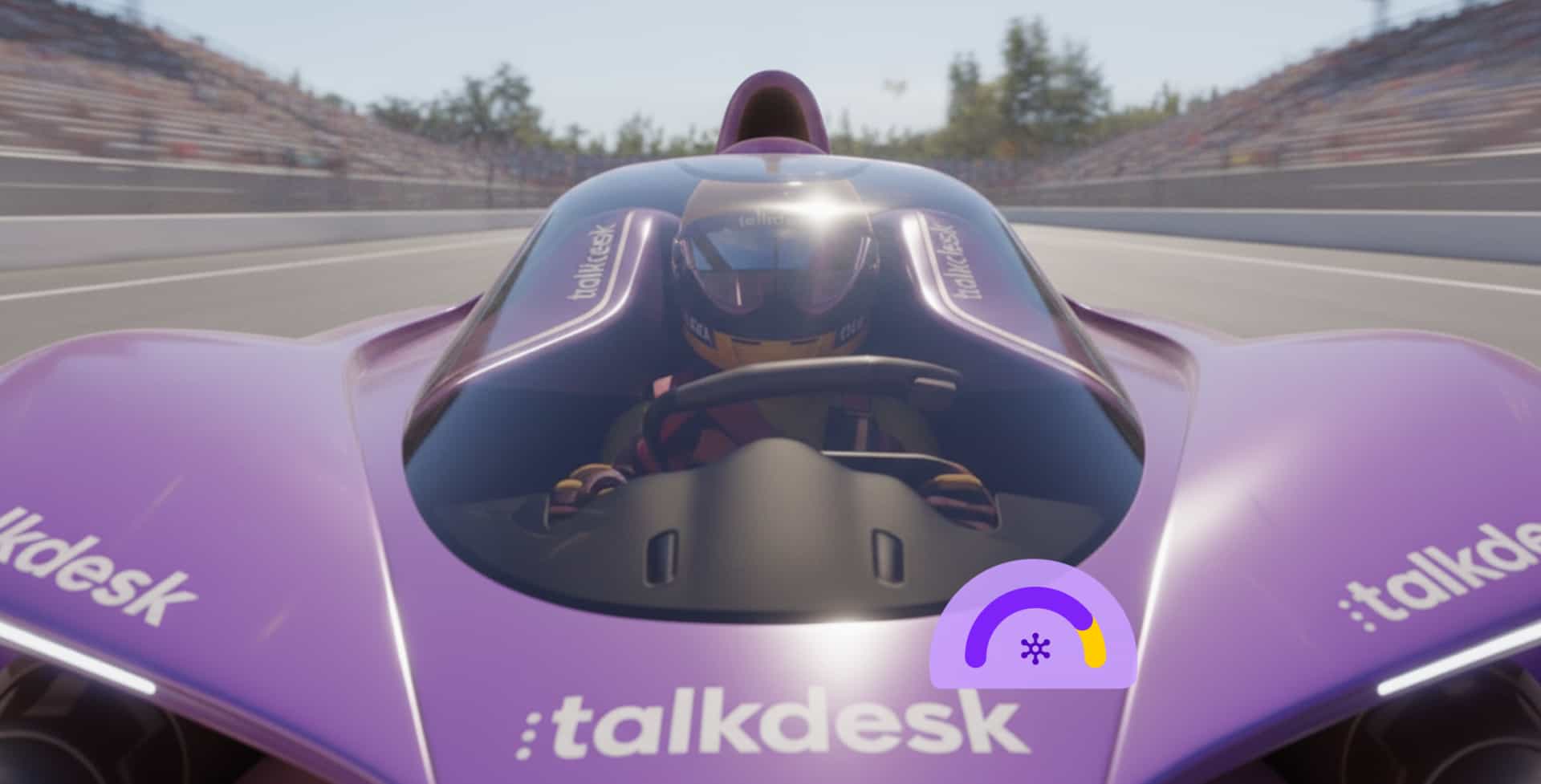
In high-performance racing, a split-second delay in the pit lane is the difference between taking the podium and spinning out before the final lap.
Today, businesses are running their own high-stakes race: the pursuit of customer experience (CX) supremacy. But right now, many are driving with a massive blind spot.
According to recent industry data, 80% of businesses believe they are delivering a seamless, fast, and personalized customer experience. Yet, only 56% of their customers agree.
This is the CX perception gap. It is the corporate equivalent of believing you are driving a championship-winning supercar, while your customers feel like they are riding in a sputtering sedan that is running on fumes.
Why is this gap so wide? Why do businesses believe they are setting track records while their customers are struggling just to get out of first gear?
The answer doesn’t lie in your strategic vision. It lies under the hood, in your execution.
Slapping a spoiler on a broken transmission.
Ask 30 people what a seamless experience means, and you’ll probably get 20 different answers.
To one, it means not having to repeat information across channels. To another, it means moving from a phone call to SMS without losing context. And to others, it means getting a fast answer on web chat without waiting in a queue.
None of these expectations are unreasonable. But many companies still approach omnichannel CX strategy like cosmetic car modifications. They slap a spoiler, some custom exhaust pipes, and nitro decals onto their business by deploying SMS, live chat, WhatsApp, and voice, then assume the experience is modern because channels exist. They check the boxes, stand back, and admire how “fast” their setup looks.
But adding flashy hardware to the exterior does nothing if the transmission is broken, just like adding channels doesn’t automatically create a seamless experience.
Take WhatsApp as an example. It is fundamentally an asynchronous channel. Customers use it because they want to send a quick message, get on with their day, and reply when convenient. If you deploy WhatsApp but force a customer to wait for a live human agent (only to automatically kill the engine and close the chat due to 10 minutes of inactivity), you have entirely missed the point of the channel. You checked the box, but you stalled the vehicle.
To bridge the gap and win the race, you have to align three performance vectors simultaneously:
-
The fuel (quality of the response): A complete, real-time view of the customer and their history.
-
The acceleration (speed of resolution): Fast, context-aware answers appropriate to the channel.
-
The gear (the right channel at the right time): Matching customer intent and urgency with the best interaction path.
Under the hood: Telemetry, fuel, and the data problem.
Scaling speed and quality requires automation. However, this level of automation requires AI. Raw horsepower (AI) is completely useless if you are feeding it contaminated fuel (poor data).
You need AI-ready data. Without it, the engine starts to fail.
Personalization, such as sending a proactive, automated car service reminder based on a driver’s exact mileage and past preferences, requires real-time telemetry from a unified system. Many businesses still keep their data locked in isolated garages:
-
Billing is parked in one system.
-
Product usage and telemetry are in another.
-
Marketing communication history is idling in a third.
Without unified data, embarrassing pile-ups happen on the track, and even basic personalization breaks down. Have you ever received a promotional SMS offering a health check just two days after you paid $1,000 to have your car fully serviced at that exact dealership?
These experiences happen because systems don’t operate together in real time. To the customer, it feels like a chaotic crash. To the business, it’s a massive waste of fuel.
Building a high-performance data engine.
Improving the omnichannel customer experience strategy, or tuning your data layer, doesn’t require rebuilding the entire chassis from scratch. Instead, the Customer Experience Automation (CXA) platform should act as a high-speed orchestration hub focusing on three core elements:
-
Enterprise knowledge ingestion. AI should act like an onboard computer, reading unstructured data instantly. It should ingest websites, PDFs, SharePoint folders, and internal manuals on the fly to understand how your business runs without demanding a database rebuild.
-
Unified API integrations. Customer records should flow across back-office systems (CRMs, ERPs, industry-specific databases) through real-time integrations and pre-built connectors.
-
Interaction memory. This is the ultimate differentiator. Context must travel across conversations and channels. If a customer has contacted support three times about an unresolved issue, the system should recognize them immediately and respond accordingly. Instead of a generic “Welcome, how can I help you today?”, the system should say, “Hello, you may be calling about your recent service appointment. Is that correct?”
Don’t ignore the red blinking lights.
Many organizations claim they don’t know why they are losing the race. But the warning signs are glaringly obvious—they are just ignoring their dashboard.
If the check engine light stays on long enough, drivers eventually get used to it and keep driving. The same thing happens with poor operational metrics.
Consider this: We often see companies with a 34% call abandonment rate. That means more than one-third of their customers are hanging up in frustration. Even worse, 22% of those drops occur before the customer even reaches a queue.
They are redlining their engines into IVR hell: “Press 1 for sales, press 2 for support, press 65 if you are still alive.” Eventually, customers run out of patience, hit the brakes, and steer away.
Case study: Shaving seconds off the pit lane.
We recently worked with a company that was failing to pick up 45% of their incoming calls due to understaffing. The 55% they did answer were handled by third-party outsourcing partners (BPOs).
Because of an incredibly complex, confusing IVR menu, 30% of calls were misrouted to the wrong outsourcer before being transferred again. The company was paying twice to handle the same interaction, and burning money in the pit lane.
We took their traditional IVR and threw it in the scrap heap. We replaced it with a simple, conversational open prompt: “Welcome. How can I help you today?” Using conversational AI and API lookups, the system could instantly identify the customer, understand intent, and the call appropriately.
The results were staggering:
-
87% of calls reached the correct destination on the first try.
-
The remaining calls were automatically filtered out as spam/out-of-scope.
-
Sales conversions increased by 26% because legitimate customers were no longer abandoning the queue.
This wasn’t a victory of futuristic technology; it was a victory of streamlining the pit lane to get drivers back on the track faster.
Bridging the gap: There is no fast follower.
We must circle back to where we started: the massive gap between how businesses think they are performing (80%) and what customers actually experience (56%).
This gap exists because we have handled customer experience as a series of isolated technology acquisitions rather than a unified strategy. We deploy channels we can’t support, buy AI tools we are not data-ready to use, and ignore the red blinking lights on our dashboard metrics because “that’s just how business is.”
To close this gap, you need to abandon a dangerous corporate myth: the idea of the “fast follower.”
In AI-driven CX automation, there is no such thing as a fast follower. In a high-speed race, if you choose to play “fast follower,” you are just choking on the slipstream dust of the leader. At the pace this technology is evolving, you are either actively running on the front line or you are hopelessly behind. There is no middle ground.
My recommendation to CX leaders is simple: Stop running blindly in the direction of the hype. You do not need to rebuild your entire engine overnight, nor do you need to let a runaway robot drive your car.
Instead:
-
Put your core metrics in a blender. Look at drop rates, transfer rates, and IVR abandonment metrics. The numbers will tell you exactly where your engine is redlining.
-
Assess data readiness. Do you have a unified way to access customer history and enterprise knowledge, or is your diagnostic data locked in silos?
-
Choose one specific, high-value friction point. Whether it is intelligent routing, unified data orchestration, or proactive communication, fix that one thing, shave seconds off your time, and scale from there.
The warning lights on your CX dashboard are blinking. Your customer data is waiting. Stop idling on the starting grid, stop waiting on the sidelines, and start building experiences that keep your customers in the fast lane.

AI AGENTS
Meet the AI agents built for your industry.
Pick one, run a pilot in your environment, and prove ROI in 30 to 45 days.
About Pedro Andrade
Pedro Andrade is vice-president of AI at Talkdesk, where he oversees a suite of AI-driven products aimed at optimizing contact center operations and enhancing customer experience. Pedro is passionate about the influence of AI and digital technologies in the market and particularly keen on exploring the potential of generative AI as a source of innovative solutions to disrupt the contact center industry.