Automated quality management: How to improve performance
Most contact centers manually review only 1–3% of interactions. Automated quality management (AQM) changes that by using AI to evaluate every conversation, surface coaching opportunities, and scale quality programs without adding headcount.
11:43 min read
Listen to article
11:29
Key takeaways.
-
Automated quality management uses AI to evaluate 100% of contact center interactions, so teams can move beyond the small sampling that manual review covers.
-
AQM enables faster, more targeted agent coaching based on real interaction data.
-
Modern AQM tools analyze sentiment, detect compliance risks, and generate insights across voice and digital channels.
-
Choosing the right automated quality management software means looking for omnichannel coverage, flexible scorecards, and native platform integration.
If you’re running a contact center, you’re making decisions about coaching, compliance, and customer experience based on a small amount of manual interactions. That means performance issues go unaddressed, compliance risks surface too late, and coaching is guided by incomplete information.
Automated quality management (AQM) uses AI to evaluate every interaction automatically, giving you visibility into agent performance, compliance exposure, and customer experience quality. When paired with AI knowledge management, those insights connect directly to the knowledge agents need to improve.
This post covers how AQM works, the operational benefits it delivers, best practices for building a strong program, and how to choose the right automated quality management software for your contact center.
What is automated quality management?
Automated quality management uses AI to evaluate contact center interactions, score agent performance, and surface coaching opportunities without manual sampling. It replaces random call listening and reactive feedback cycles with a continuous, data-driven approach to quality that scales with your operation.
Every agent gets fair, consistent evaluation based on their actual work, not a random sample of it.
How automated quality management works.
Voice calls, chats, emails, and messaging interactions are automatically recorded and transcribed, then evaluated against the defined scorecard criteria. That includes tone, sentiment, script adherence, compliance language, and resolution quality.
Once scored, those signals are aggregated into performance dashboards by agent, team, and interaction type. Low-scoring interactions and flagged issues surface automatically, triggering coaching assignments without manual review.
QA data feeds back into scorecard criteria over time, keeping the program aligned with evolving quality standards.
How AQM improves contact center operations.
Contact center leaders are under more pressure than ever to improve agent performance, manage compliance exposure, and deliver consistent customer experiences. AQM delivers on all three without requiring additional headcount.
Here is what that looks like in practice.
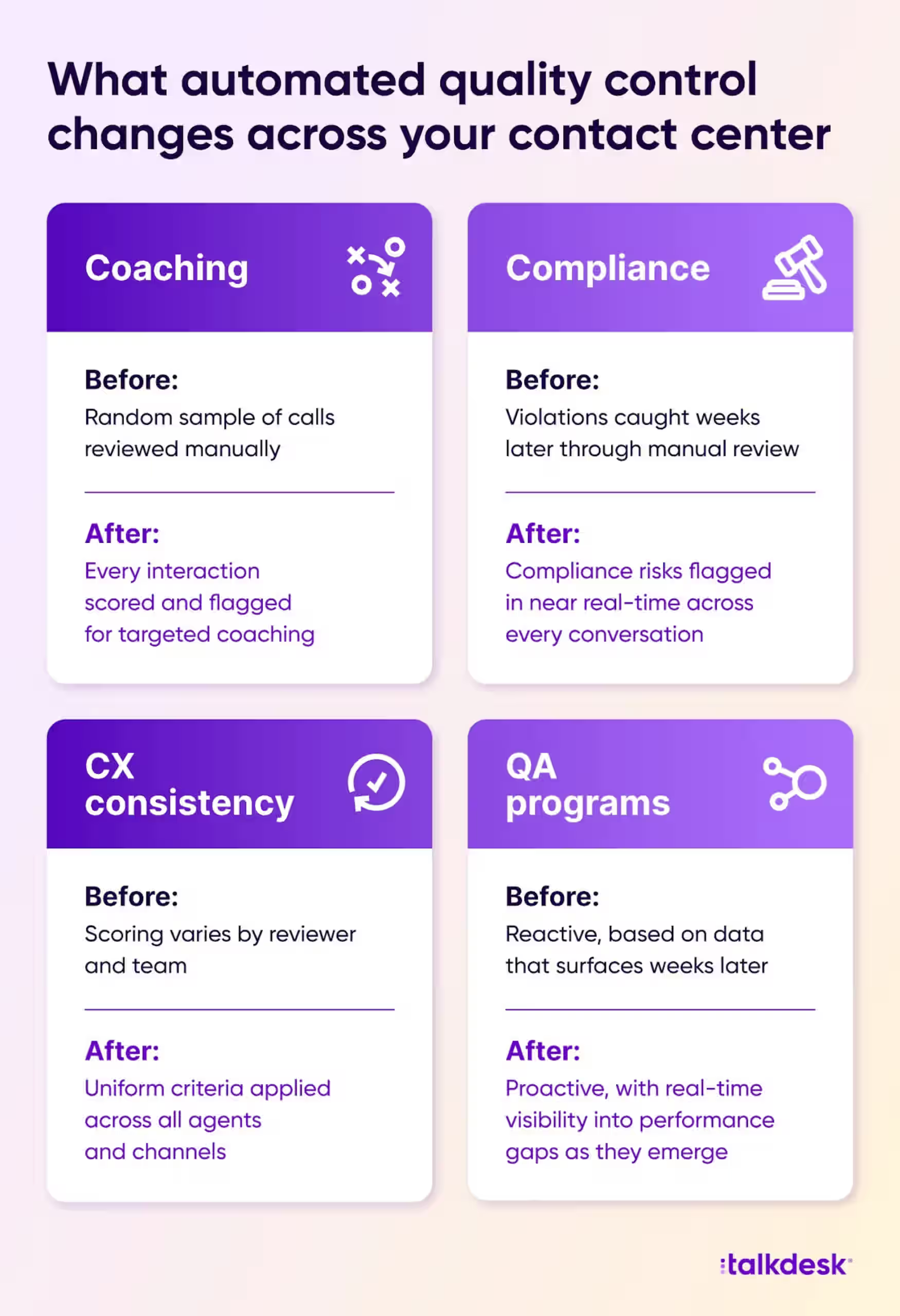
Agent coaching quality improves.
Coaching consumes significant time and budget in every contact center, yet most of those decisions are still based on a small, random sample of interactions. AQM changes that by replacing random sampling with complete performance data, giving managers the visibility to identify patterns across every agent, not just the handful whose calls get reviewed.
Compliance coverage scales with volume.
Manual QM was never built to keep pace with the volume of a modern contact center. When only a fraction of interactions get reviewed, compliance risks go undetected until they become a real problem. AQM gives compliance teams full coverage without adding headcount, automatically monitoring every conversation for:
-
Required disclosures.
-
Prohibited language.
-
Regulatory triggers.
CX consistency improves across teams and channels.
With manual QM, scoring consistency depends on the reviewer. Two supervisors evaluating the same call can reach different conclusions, and agents on different teams or channels often get held to different standards without anyone realizing it.
AQM applies the same criteria to every interaction across voice, chat, and email, so scoring is objective, uniform, and fair. That consistency extends to virtual agents too, ensuring automated interactions are held to the same quality standards as human-handled ones. When an agent falls below standard, it surfaces quickly rather than going unnoticed until a customer complaint makes it visible.
QA costs and operational efficiency improve.
Manual QM is resource-intensive. Supervisors spend significant time reviewing a fraction of interactions, and the insights they surface often arrive too late to prevent the same issues from recurring. AQM reduces that burden by automating the evaluation process across every interaction, freeing QA teams to focus on coaching and program improvement rather than manual review. The result is a leaner QA operation that scales with interaction volume without requiring additional headcount
QA programs shift from reactive to proactive.
With manual QM, issues surface weeks after they occur. Take an agent handling refund requests incorrectly after a policy change. That mistake could go unreviewed for weeks while dozens of customers get the wrong answer.
AQM flags it within days across every agent handling refunds, so QA leaders can correct it before it becomes widespread. That shift from reactive to proactive changes where QA leaders focus their time and attention.
TALKDESK CXA | QUALITY MANAGEMENT
Improve contact center performance at scale.
Use AI to evaluate every interaction and surface coaching insights that drive ongoing improvements in quality and performance across the customer journey.
Best practices for getting the most out of AQM.
Getting AQM running is the easy part. Driving consistent performance improvements takes more intention, and the same quality assurance best practices that underpin strong QA programs apply here. Here are five that make the difference.
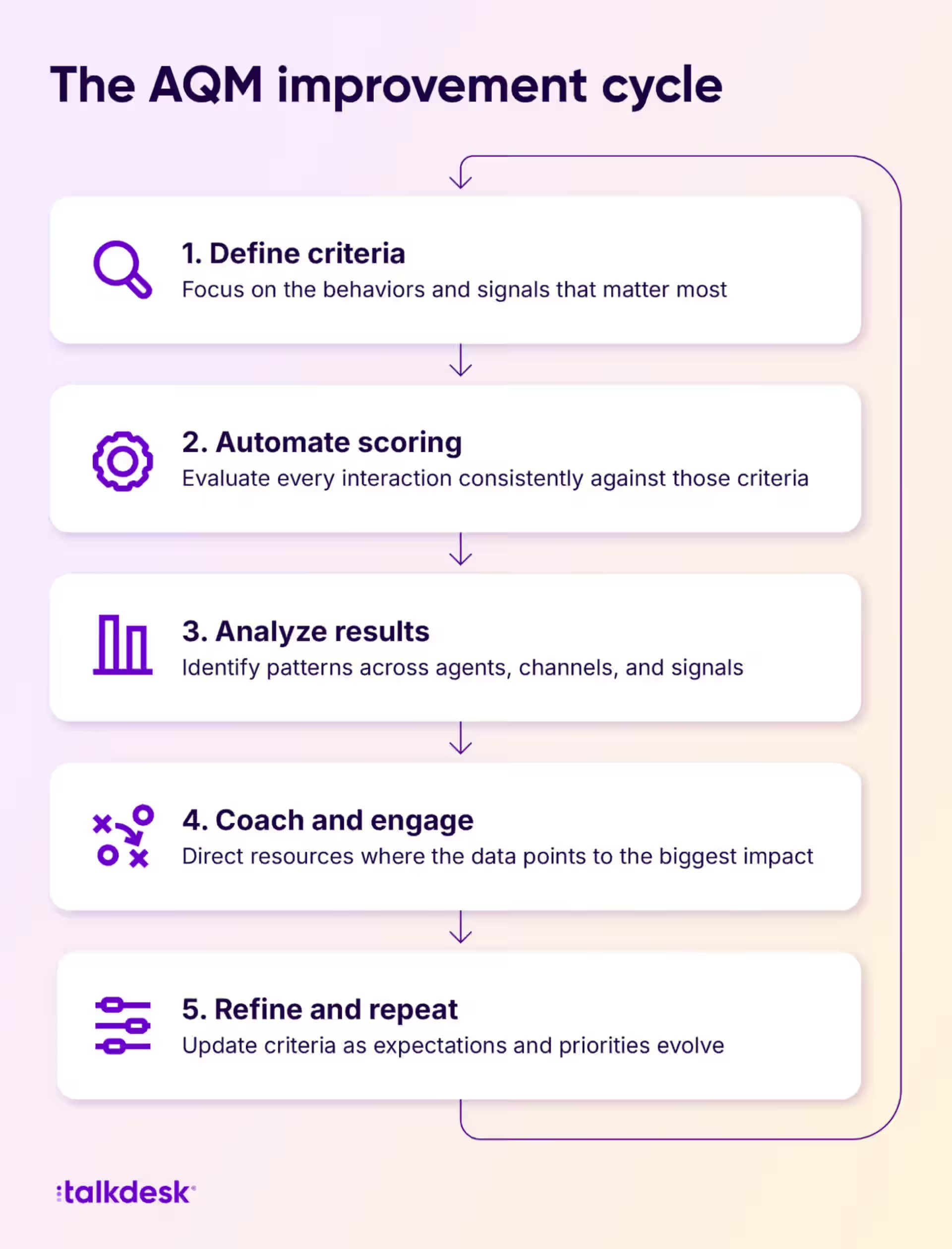
Define scoring criteria before you automate.
AI scores what you tell it to look for, so the quality of your outputs depends on the quality of your inputs. Before turning on automated scoring, identify the behaviors, disclosures, and quality signals that matter most for your operation.
A financial services contact center might prioritize required regulatory disclosures and complaint handling language. A retail contact center might weight empathy, first contact resolution, and upsell adherence. Getting specific upfront means your scoring reflects real quality standards from day one.
Use sentiment data to prioritize coaching.
Not every low-scoring interaction needs the same level of attention. Sentiment analysis surfaces conversations where customer frustration was highest, so focus coaching where both QA scores and sentiment signals point to a problem.
A call where an agent scored low on compliance language but the customer remained neutral is a different priority than one where both the score and sentiment flagged a poor experience. Sentiment data helps you make that distinction at scale.
Tie QA scores to business outcomes.
Track QA score trends alongside CSAT, FCR, and AHT. Connecting QA performance to customer outcomes shows which scoring criteria actually predict stronger AI customer experience results and justifies the program internally.
A contact center that notices low empathy scores consistently correlate with poor CSAT can weigh that criterion more heavily and direct coaching accordingly. Exporting that data into broader workforce reporting also makes the business case for continued QA investment.
Use gamification to drive agent adoption.
AQM only works if agents engage with the feedback. Leaderboards, performance milestones, and social recognition build a culture where improvement feels rewarding rather than punitive.
Contact centers that introduce gamification alongside AQM often see faster adoption because agents have visibility into their own scores and a clear path to improvement. Reinforce positive behavior, not just correct what went wrong.
Review and refine scorecards regularly.
Customer expectations change, products evolve, and compliance requirements shift. A scorecard built at launch can become outdated without a regular review cadence.
Set time each quarter to evaluate which criteria are still predictive, which have become redundant, and where new signals should be added. Use QA data trends to identify what is no longer predictive and adjust accordingly.
Choosing the right automated quality management software.
Not all AQM platforms deliver the same level of insight or operational value. Here is what separates a strong solution from a basic one:
-
AI-powered scoring that goes beyond keywords: Keyword rules miss context. The best platforms combine keyword scoring with generative AI that understands tone, sentiment, and intent.
-
Complete interaction context: Synchronized voice and screen recording gives supervisors the context needed to evaluate and coach accurately.
-
Flexible, customizable scorecards: Look for an intuitive form builder, pre-built templates, and time-stamped annotations tied directly to recordings.
-
Native WEM integration: QA insights deliver the most value inside a unified platform. Talkdesk Quality Management connects natively with Copilot, Knowledge Management, and Workforce Management.
-
Performance tracking and gamification: Look for platforms that track performance, support data export, and use gamification and social recognition to keep agents engaged.
Automated quality management that works across every interaction.
Moving from manual sampling to full interaction coverage changes how you coach agents, catch compliance risks, and act on performance trends across your entire operation.
Talkdesk Quality Management brings those capabilities together in one platform. AI-powered scoring, synchronized voice and screen recording, and native WEM integration mean quality data flows into every part of how your team operates. For teams building out a broader contact center quality assurance program, a unified platform makes every part of that work more effective.
Build the data foundation your CX automation needs to scale.
Automated quality management FAQs.
Automated quality management (AQM) uses AI to evaluate every contact center interaction, score agent performance, and surface coaching opportunities automatically. Instead of relying on random sampling, AQM gives contact center leaders a complete, consistent picture of every customer conversation across voice and digital channels.
AQM helps contact centers shift from reactive to proactive quality management. With full interaction coverage, contact center supervisors can identify coaching opportunities faster, monitor compliance across every conversation, and deliver more consistent customer experiences. For organizations with significant coaching investments, full coverage makes every dollar more effective.
Manual QM relies on supervisors reviewing a small random sample of interactions, leaving significant blind spots in coaching, compliance, and performance visibility. AQM uses AI to evaluate every interaction against defined criteria, delivering consistent, unbiased scoring at scale without additional headcount.
AQM monitors every interaction for required disclosures, prohibited language, and regulatory triggers across voice and digital channels. Issues surface in near real-time rather than weeks later, giving teams the visibility to act before problems escalate.
Yes. Leading AQM platforms evaluate interactions across voice, chat, email, and messaging. With more customer interactions happening outside of phone calls, evaluating only voice leaves meaningful gaps in any QA program.
-
Establish scoring criteria: Identify the behaviors, disclosures, and quality signals that matter most for your contact center.
-
Build scorecards: Create custom evaluation forms around those criteria before turning on automated scoring.
-
Connect your workflows: Integrate AQM with coaching, workforce management, and agent assist tools so insights flow directly into agent development.
-
Turn on automated scoring: Let AI evaluate 100% of interactions against your defined criteria.
-
Review and refine: Use early QA data to identify gaps in your scorecards and adjust criteria as needed, treating AQM as an ongoing AI implementation rather than a one-time setup.
Most contact centers can get AQM up and running within a few weeks. Cloud-based solutions native to the contact center platform go live faster than standalone tools. The biggest factor in speed is preparation. Teams that define scoring criteria and build scorecards before go-live see faster time-to-value.

About Celia Cerdeira
Célia Cerdeira has more than 20 years experience in the contact center industry. She imagines, designs, and brings to life the right content for awesome customer journeys. When she's not writing, you can find her chilling on the beach enjoying a freshly squeezed juice and reading a novel by some of her favorite authors.